The future of beauty will not be shaped by novelty alone. It will depend on safer, traceable, and measurable cosmetic ingredients. This introduction frames the question: what is the future of cosmetic ingredient innovation? The answer is emerging through biotechnology, upcycled materials, microbiome research, plant-based actives, and low-impact formulation methods.
Cosmetic chemist Perry Romanowski has stated, “Cosmetics are about chemistry, not magic.” This principle remains important as brands promote peptides, fermented extracts, ceramides, and botanical alternatives. Each ingredient needs more than an attractive story. It requires stability testing, compatibility checks, transparent sourcing, and evidence that supports its intended cosmetic benefit. A smooth cream may feel impressive in the laboratory, yet perform differently after months on a bathroom shelf.
The ten trends explored here connect scientific progress with practical formulation experience. Precision fermentation may reduce pressure on agricultural resources. Waterless products can lower transport weight, but they may create new packaging challenges. Artificial intelligence can accelerate ingredient discovery, although its suggestions still require human judgment. Consumers also expect clearer explanations, not exaggerated promises.
Some assumptions may prove wrong. Sustainability claims can become vague. “Natural” does not automatically mean safer or better. New materials may carry unknown environmental costs. That uncertainty deserves attention.
This overview therefore examines innovation with curiosity and restraint. It considers efficacy, safety, ethics, scalability, and regulatory responsibility. The most valuable ingredient trend may not be the newest one. It may be the one that performs reliably, communicates honestly, and improves the complete product lifecycle.
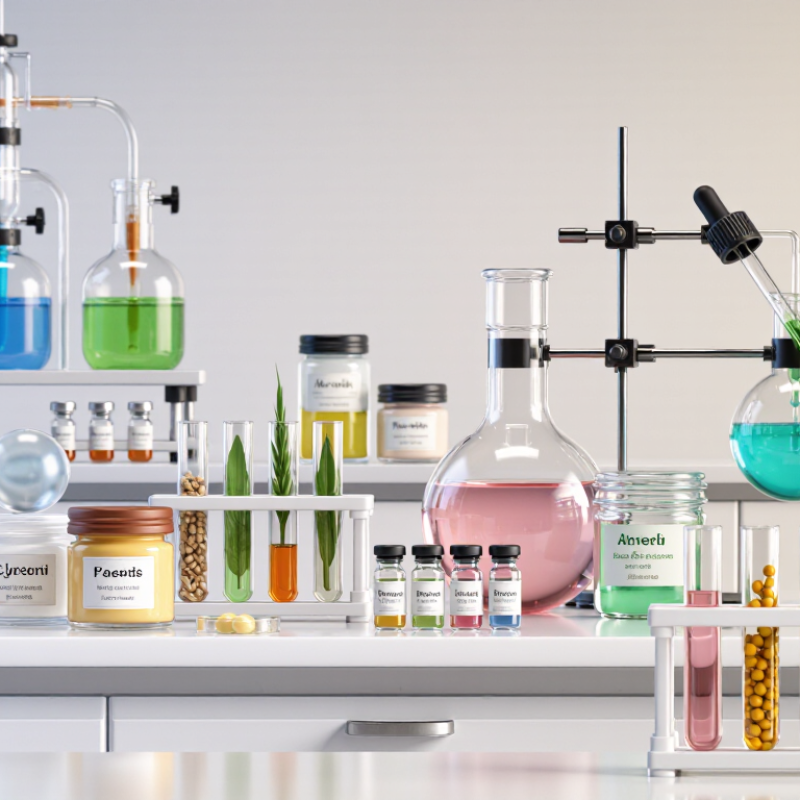
Top 10 Cosmetic Ingredient Trends Shaping the Future?
Definition and Scope of Cosmetic Ingredient Trends
Cosmetic ingredient trends describe sustained shifts in what formulas use, why they use it, and how evidence supports the choice. The scope includes active ingredients, emollients, surfactants, preservatives, colorants, delivery systems, and processing aids. It also covers sourcing, biodegradability, traceability, safety, performance, and regulatory documentation. Definitions matter.
A trend is not simply a popular label on packaging. It becomes meaningful when formulation data, consumer demand, and supply capability move together. Biotech-derived materials, upcycled feedstocks, microbiome-friendly concepts, and multifunctional ingredients are gaining attention. MarketsandMarkets’ Cosmetic Ingredients Market report estimates the sector at about USD 31.5 billion in 2023, with continued growth projected through 2028. McKinsey’s beauty market analysis forecasts roughly USD 580 billion in global beauty sales by 2027, increasing pressure for measurable ingredient performance.
In practical evaluation, experts should ask four questions: Is the ingredient safe at its intended concentration? Does testing support the claimed benefit? Can suppliers provide consistent quality and traceability? Will the formula remain stable on a warm bathroom shelf? Claims need proof. “Natural” alone explains little. It may describe origin, not efficacy or environmental impact. The boundary remains messy, especially when sustainability claims rely on incomplete lifecycle data. Early market signals can be noisy and sometimes wrong.
Cosmetic ingredient trends refer to emerging patterns in ingredient selection, sourcing, formulation, performance, safety, and consumer expectations across skincare, haircare, color cosmetics, body care, and sun care. The table summarizes widely observed industry directions without using company or brand data.
| No. | Ingredient Trend | Definition and Scope | Representative Ingredient Categories | Main Market and Scientific Drivers | Formulation Considerations | Current Development Outlook |
|---|---|---|---|---|---|---|
| 1 | Biotechnology-Derived Ingredients | Ingredients produced or optimized through fermentation, cell culture, enzymatic processing, or other biotechnology methods instead of relying solely on traditional extraction or petrochemical synthesis. |
Fermented actives Postbiotic preparations Bio-based peptides Fermentation-derived humectants |
Interest in consistent quality, controlled production, resource efficiency, and novel active molecules with defined composition. | Manufacturers must assess stability, preservation, compatibility with the formula, allergen status, and the regulatory definition of biological or fermented materials in each market. | Strong potential for high-performance actives and more controlled supply chains, although production cost, scale-up, and substantiation remain important barriers. |
| 2 | Upcycled and Circular Ingredients | Cosmetic raw materials recovered from by-products or secondary streams of food, agriculture, forestry, or other processing systems and converted into usable cosmetic ingredients. |
Fruit-seed oils Coffee-derived extracts Cereal bran fractions Recovered plant waxes |
Waste reduction, circular-economy objectives, improved resource efficiency, and consumer interest in traceable material use. | Raw-material variability, contaminant control, traceability, extraction method, odor, color, and reliable documentation must be carefully managed. | Likely to expand where suppliers can demonstrate consistent specifications, safe processing, and credible lifecycle benefits. |
| 3 | Skin Barrier and Microbiome Support | Formulation strategies focused on maintaining the skin barrier, reducing excessive dryness, and supporting the balance of microorganisms present on the skin. |
Ceramides Physiological lipids Prebiotic substrates Postbiotic ingredients Humectants and occlusives |
Growing awareness of barrier function, sensitive-skin concerns, transepidermal water loss, and the relationship between product tolerance and skin comfort. | Claims require careful substantiation. Formula pH, surfactant mildness, preservative systems, lipid dispersion, and testing methodology can affect performance. | Expected to remain a major skincare direction, particularly in products designed for sensitive, dry, or compromised-feeling skin. |
| 4 | Advanced Peptides and Protein-Based Actives | Use of short-chain peptides, signal peptides, carrier peptides, and other protein-related materials intended to support the visible appearance of skin or hair. |
Signal peptides Copper-containing peptides Keratin-associated proteins Amino-acid complexes |
Demand for targeted anti-aging, firming, smoothing, hair-strengthening, and high-efficacy formulations. | Peptides may be sensitive to pH, oxidation, heat, and interactions with other ingredients. Delivery, concentration, stability, and clinical support are central considerations. | Continued innovation is expected in peptide design, delivery systems, multifunctional blends, and evidence-based cosmetic claims. |
| 5 | Sustainable and Bio-Based Emollients | Replacement or reduction of conventional emollient systems through renewable, biodegradable, low-impact, or responsibly sourced alternatives with comparable sensory performance. |
Plant-derived esters Natural triglyceride oils Bio-based hydrocarbons Sugar-derived emollients |
Pressure to reduce environmental impact while preserving spreadability, after-feel, shine, protection, and formulation versatility. | Performance must be evaluated for oxidation, sensory profile, compatibility, cold stability, supply continuity, and accurate sustainability communication. | Development will focus on drop-in alternatives that deliver the sensory qualities of conventional materials without compromising product stability. |
| 6 | Waterless and Concentrated Formulations | Products designed with little or no added water, including solid, anhydrous, powder, balm, stick, and concentrated formats. |
Solid surfactants Anhydrous oils and butters Powdered enzymes Concentrated active systems |
Potential reductions in water transport, packaging volume, and preservative requirements, together with interest in compact product formats. | Product hardness, melting behavior, dosing, dissolution, user experience, microbial risk after consumer contact, and packaging protection require testing. | Growth is most likely in cleansing, haircare, treatment, and travel-oriented formats where concentrated delivery offers clear practical benefits. |
| 7 | Multifunctional and Simplified Ingredient Systems | Use of ingredients that provide several functions at once, enabling shorter or more purposeful ingredient lists without sacrificing product performance. |
Multifunctional humectants Preservative boosters Antioxidant-emollient systems Active ingredients with sensory benefits |
Interest in simple routines, transparent labeling, improved formulation efficiency, and products addressing several consumer needs simultaneously. | Each function must be validated at the actual use level. Simplification does not automatically mean lower irritation risk or better environmental performance. | Likely to influence product design across skincare, haircare, and body care as formulators seek efficient, understandable ingredient systems. |
| 8 | Personalized and Adaptive Beauty Formulation | Products or routines adjusted according to skin type, climate, age, lifestyle, hair condition, or digitally assessed consumer needs. |
Modular active concentrates Adjustable moisturization systems Condition-specific actives Encapsulated or controlled-release materials |
Demand for tailored experiences, data-supported recommendations, and products designed for diverse skin and hair conditions. | Personalization requires reliable assessment criteria, appropriate dosage guidance, robust stability, clear claims, and safeguards against inappropriate use. | Expansion is expected through modular product architecture and better segmentation of cosmetic needs, rather than through medical diagnosis. |
| 9 | Encapsulation and Controlled Delivery | Technologies that protect cosmetic ingredients or regulate their release to improve stability, sensory properties, deposition, or delivery to the intended application area. |
Lipid vesicles Biodegradable polymer systems Cyclodextrin complexes Microcapsules and emulsified carriers |
Need for improved active stability, reduced odor or irritation, enhanced product aesthetics, and more efficient use of sensitive ingredients. | Particle size, release profile, compatibility, biodegradability, inhalation exposure for powders, and consumer safety must be assessed. | Further development will emphasize safer carrier materials, improved biodegradability, scalable manufacturing, and measurable performance benefits. |
| 10 | Evidence-Based Natural and Clean-Label Formulation | Use of naturally derived, minimally processed, or consumer-recognizable ingredients supported by safety, efficacy, quality, and sustainability evidence rather than by marketing language alone. |
Botanical extracts Natural antioxidants Mineral pigments Naturally derived surfactants |
Consumer preference for ingredient transparency, perceived simplicity, responsible sourcing, and clearer explanations of product function. | Natural origin does not automatically indicate safety or sustainability. Formulators must evaluate allergens, impurities, batch variation, preservation, efficacy, and regional claim requirements. | Future growth will favor transparent, traceable, and scientifically substantiated natural or naturally derived ingredients over vague clean-label positioning. |
Check its identity, purity, concentration, intended use, and stability. Review toxicology, allergen information, and contamination controls. Evidence matters.
No. Its composition may change with harvest, extraction method, and storage. Patch testing helps, but it cannot replace a full safety assessment.
No. Patch testing offers useful skin-compatibility evidence. It does not replace toxicological review, stability testing, or broader formula assessment.
Examine water use, land use, energy, packaging, transport, and disposal. Renewable sourcing alone does not prove low environmental impact. The full story matters.
Not always. Fruit seeds, shells, and plant residues can become useful materials. However, intensive purification may require significant energy and water.
Test the finished formula for texture, preservation, color stability, cleansing ability, and skin feel. An ingredient may fail after heat, light, or pH changes.
Skin responses can vary across skin types and climates. Small pilot batches may reveal odor changes, color shifts, or separation after heat exposure.
No. “Natural” does not guarantee safety or effectiveness. Microbiome research is still developing, so long-term evidence may remain incomplete. Some uncertainty is healthy.
Cosmetic ingredient trends reflect the evolving science, consumer expectations, and environmental priorities influencing modern formulation. Innovation is being driven by demand for safer products, transparent sourcing, improved skin compatibility, personalized care, and lower environmental impact. Emerging directions include biotechnology-derived ingredients, upcycled and renewable raw materials, multifunctional actives, microbiome-conscious solutions, waterless formats, gentle preservation systems, and ingredients designed for sensitive or diverse skin types.
As the industry develops, each ingredient must be evaluated through a balanced view of safety, proven performance, ethical sourcing, biodegradability, and lifecycle impact. Formulators will increasingly combine scientific research with responsible production methods to create products that are effective, stable, and suitable for long-term use. The question “what is the future of cosmetic ingredient innovation” points toward a more precise, sustainable, and evidence-based field, where advanced technology supports both consumer wellbeing and environmental responsibility.

 Spekciton Biology